PORTALS
Here is the punchy, engaging revision for this section, continuing in the Option 1 style:
Cosmic Short-Cuts: Wormholes & Portals
Wormholes aren’t science fiction—they exist. Classical physics based on the Einstein-Rosen bridge suggests creating and sustaining a portal requires the energy of an entire star, yet the theory leaves a critical question unanswered: where do they actually lead? While finding an exit remains a mystery, one NASA scientist believes he has solved the first half of the puzzle: locating the entry point right in our cosmic backyard.
All Images are from NASA website Free Use.
Hidden Gateways in Earth’s Backyard
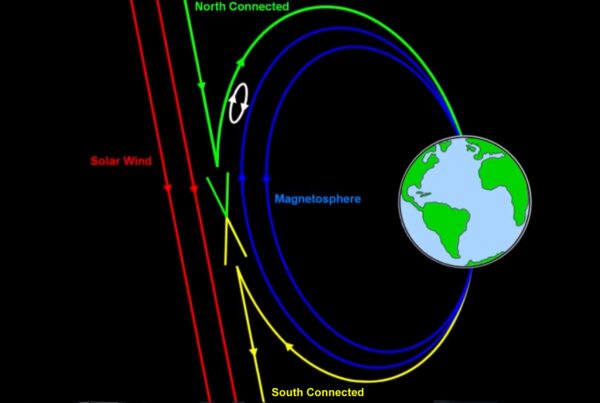
Science fiction’s iconic concept of a portal—an extraordinary door through space and time—is closer to reality than we think. As University of Iowa plasma physicist Jack Scudder revealed in 2012, invisible portals called “X-points” or electron diffusion regions open regularly in our upper atmosphere.
These magnetic convergence points create direct, uninterrupted pathways stretching 93 million miles from Earth to the Sun’s outer atmosphere. Confirmed by NASA’s THEMIS spacecraft and Europe’s Cluster probes, these dynamic gateways prove that shortcuts through cosmic magnetic fields are not just theoretical—they are already happening right above us.
Dynamic Cosmic Gateways
Opening and closing dozens of times each day, these invisible portals form tens of thousands of kilometers above Earth, where our geomagnetic field collides with the relentless solar wind. While many are brief and small, others stretch into vast, sustained openings. Massive streams of energetic particles pour through them, superheating Earth’s upper atmosphere, triggering geomagnetic storms, and lighting up polar auroras.
To decipher these elusive phenomena, NASA launched the Magnetospheric Multiscale Mission (MMS)—a fleet of four sensor-laden spacecraft positioned to surround and study these unstable, hidden doorways in real time.
Cosmic Conduits & Planetary Bridges
Science confirms that plasma spikes, or X-points, routinely erupt within our magnetosphere. While research into these energy convergences is still in its early stages, satellite data hints at an extraordinary possibility: these magnetic cross-points may act as functional conduits—transfer portals capable of linking Earth to other worlds.
The Breakthrough in Chaotic Plasma
Building on the work of the MMS mission, University of California, Berkeley plasma physicist Tai Phan uncovered a missing link in astrophysics: magnetic reconnection occurring inside extreme turbulence. Historically, scientists believed reconnection only happened in calm space environments. Data from the MMS spacecraft proved it also strikes inside the magnetosheath—a highly chaotic region where solar winds violently batter Earth’s magnetic boundary.
High-Speed Precision in Deep Space
To capture this elusive phenomenon, NASA deployed four identical MMS spacecraft flying in a tight pyramid formation just 4.5 miles apart. Equipped with sensors 100 times faster than previous missions, MMS cornered a turbulent reconnection site in three dimensions. Rather than ejecting broad jets of ions, this chaotic reconnection fires razor-thin electron jets only a couple of miles wide—providing definitive proof that magnetic gateways operate even in the most turbulent reaches of space.
Deciphering the Signposts
Despite their chaotic nature, cosmic portals leave distinct signatures—and Jack Scudder unlocked how to read them. Portals form through magnetic reconnection, where crisscrossing magnetic field lines from the Sun and Earth suddenly snap and fuse together. This violent reconnection hurls charged particles outward, creating an electron diffusion region at the exact point of contact.
The Polar Blueprint
To map these invisible doorways, Scudder analyzed a decade of archived data from NASA’s Polar spacecraft. By examining how Polar’s instruments responded during X-point encounters, he identified five specific combinations of magnetic field and particle measurements that act as definitive cosmic signposts.
Bypassing the Search Phase
This discovery transformed how NASA operates in deep space. Instead of spending a full year searching blindly, a single MMS spacecraft can instantly detect an X-point and alert the rest of the fleet to triangulate its position. Scudder’s breakthrough eliminated years of guesswork—providing a real-world shortcut to map the universe’s most elusive gateways.

This becomes the point where scientists like Jack Scudder, Tai Phan, have led the way for Jonathan Eastwood, co- author of the paper, a lecturer at Imperial College London adds: “The smoking gun evidence is to measure oppositely directed electron jets at the same time, and the four MMS spacecraft were lucky to corner the reconnection site and detect both jets.”
What does this mean? I believe that these connections are in reality a focus point to the ground, Scudder has mapped them. I wonder if these points spend time above one region of the planet.
Just how many and where are these X-points stationary. We turn to Amy Rager a graduate student at NASA’s Goddard Space Flight Center in Greenbelt Maryland, developed the technique, discovered that:
“But instead, we can get six or seven data points, with this method, in that region it allowed us to understand what is happening.”
This information will help us understand where a portal bi-directional corridor access are located on the planetary side.
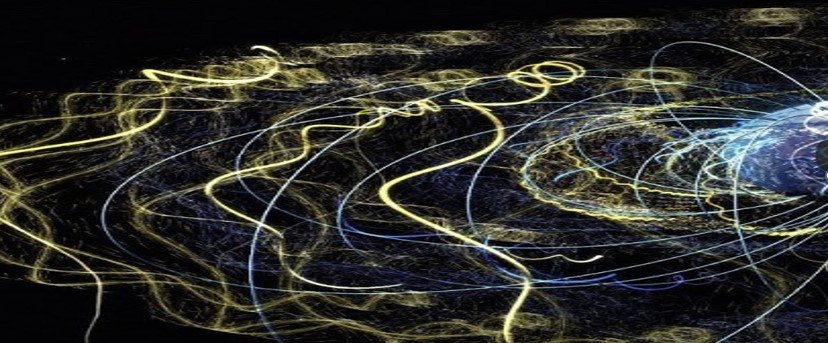
Visualizing the Solar Connection
In September 2020, NASA’s Interface Region Imaging Spectrograph (IRIS) captured groundbreaking evidence confirming Jack Scudder’s portal map: a direct, physical conduit linking Earth’s magnetosphere to the Sun. High-resolution imaging revealed “nanojets” driving massive coronal rain events—enormous plasma waterfalls cascading along magnetic lines from the solar corona back down to the Sun’s surface.
Magnetic Avalanches & Nanojets
Researchers discovered bright, razor-thin streaks of light piercing these solar magnetic loops. Triggered by explosive magnetic reconnection—where twisted magnetic fields violently snap and realign—a single event can chain into a rapid cascade. This creates a high-energy avalanche of nanojets across the Sun’s corona, fueling the massive transfers of energy that bridge deep space.
Ancient Art Meets Modern Astrophysics
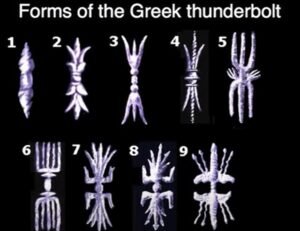
Mainstream science often dismisses efforts to link ancient artwork to modern physics, especially from armchair researchers. Yet the connection is difficult to ignore. As shown in Image 9, the list of solar flashes reveals a distinct central compression—the exact visual signature of a “Magnetic Pinch Point,” suggesting ancient cultures may have observed and recorded these high-energy plasma phenomena thousands of years ago.
Cosmic Pinch Points in Deep Space
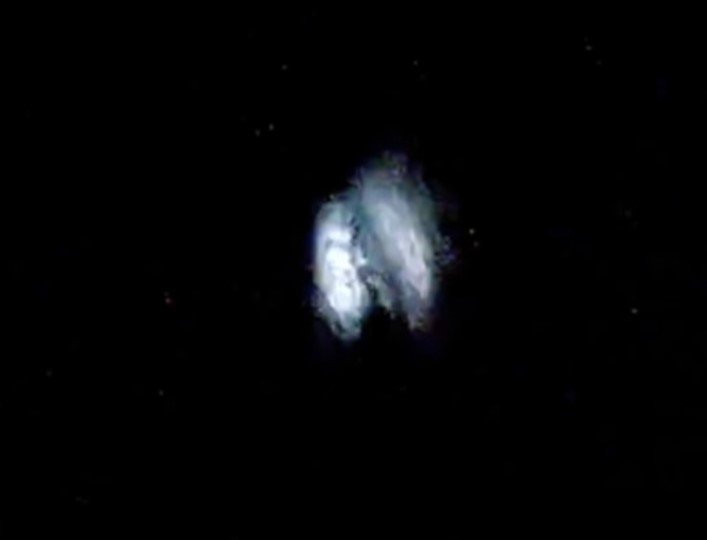
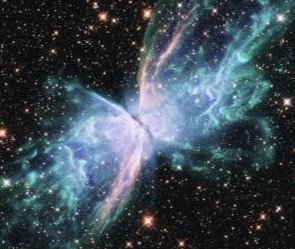
Nature deploys these high-energy structures on a grand scale across the universe. The Hubble WFC3 image of NGC 6302—the iconic “Butterfly Nebula” in the constellation Scorpius—vividly displays nature’s own cosmic pinch point in action, where powerful magnetic and gravitational forces funnel and compress superheated stellar gas into dramatic hourglass wings.